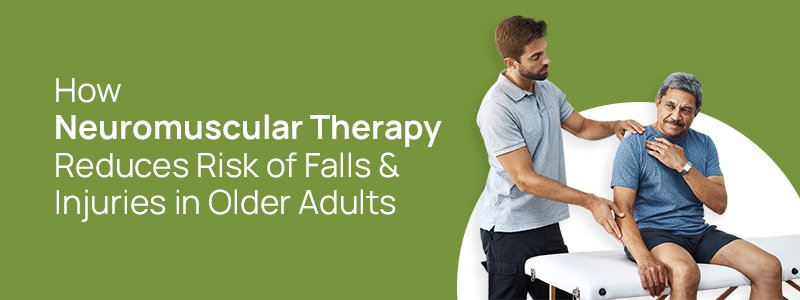
How Neuromuscular Therapy Reduces Risk of Falls and Injuries in Older Adults
Most people are afraid of ageing, but we often tend to forget how beautiful it is to fully live our lives through the years; the knowledge, the experiences, and the memories make it a beautiful journey. But this journey can get muddled when your body cannot keep up with all your aspirations. There may be changes in your grip, balance, and movement that can make you feel like you can no longer fully live your life. And this assumption can often overwhelm and hinder you from living your life to the fullest. One should always ensure that they observe the signals that their body is sending before it becomes a problem or, worse, leads to a fall. The CDC estimates that 1/4 of adults aged over 65 years fall annually.
A single fall can not only result in broken bones or head injuries, but it can also become the reason why you lose your independence and mobility. But, through the interventions of neuromuscular physical therapy, older individuals can be steadier, less likely to be injured, and move freely again.
At Saburi Physical Therapy, Houston, TX, we offer personalised and curated therapy to elders to help restore strength, balance, and independence. Ensuring that you can continue to live a fulfilling life without worry.
What does neuromuscular physical therapy entail?
It refers to a specialized form of therapy that focuses on enhancing coordination between the nervous system and muscles. It basically helps align your body and mind, so you can move better and safer.,
Although muscle strength and flexibility are the traditional areas in which physical therapy is directed, neuromuscular therapy goes a step higher to regulate:
- Coordination
- Proprioception (the sense of body position)
- Balance
- Gait mechanics
- Reaction timing
These are highly important parameters in the prevention of falls, especially in adults who may already have limited mobility or have just come out of surgery.
Why Is Neuromuscular Therapy Helpful for Older Adults?
A fall does not always come as a result of weak muscles; instead, it often happens when the brain and the body cannot react together, resulting in unexpected movement or balance. Neuromuscular therapy acts as a channel to help our responses and handle any lapses that might occur before any significant damage is done. It functions as a way to re-educate your neuromuscular system to:
- Respond more to instability (such as tripping)
- Enhance spatial awareness and balance.
- Reinstate muscle memory and rebuild coordination.
- Improve postural sway when standing or walking.
Physical therapy for older adults is ultimately to make them feel safe, regain confidence, move freely, and live happily without any hesitation or fear of falling or tripping.
Key Components of Fall Prevention in Neuromuscular Therapy
Neuromuscular physical therapy consists of different techniques, which are determined by a patient’s age, health, fall history, and mobility. This is what it usually consists of:
Balance and Stability Training.
These exercises challenge the control of movement in your body by using training drills like standing in one position, walking, or rotating. Single-leg stances, weight-shifting exercises, and a few exercises on unsteady platforms.
Gait Training
Most seniors develop unsafe walking patterns without even realizing it. Therapy helps to correct such patterns while enhancing posture, stride length, and foot placement.
Reaction Time Drills and Coordination.
These assist in enhancing reflexes and body response, which are important in catching yourself when one is near a fall.
Proprioceptive Training
These exercises are performed using balance boards, foam pads, or low-resistance bands. They help activate sensory nerves in your body and enhance brain comprehension of body position.
Manual Therapy (If Needed)
In case of joint rigidity or over-tightening of muscles, physical therapists might adopt manual therapy to increase a patient’s range of motion and minimize pain. One of the impediments to safe movement.
How Often Should Seniors Attend Neuromuscular Therapy?
Although how many therapy sessions a patient might need is extremely personalized and depends entirely on their progress, age, and mobility levels, a general rule is that the first 4-6 weeks should have 2-3 sessions per week. Which should be followed by 1-2 sessions per week of further support or maintenance. The sessions are usually 45-60 minutes with hands-on exercises, stretching, balance, and a home exercise plan.
How Long Before You See A Stark Difference?
The majority of elderly people experience better stability and more confidence just after 3-4 weeks of regular therapy. Some initial symptoms may include:
- Fewer stumbles or near falls
- Reduced fear of walking out with others or walking up the stairs.
- Better posture and walking pace.
At 6 to 8 weeks, most patients report:
- Stronger muscles
- Better coordination
- Ease in sitting and standing
- A reduced risk of falling
One should bear in mind that neuromuscular therapy is not a quick fix that can be implemented immediately; it is a long and slow process of strengthening the body and the mind in the long term.
Top Clinics for Neuromuscular Therapy in Houston, TX.
Should you or your loved one have a fear of falling, you are entitled to have specialists who are well acquainted with the ageing process and mobility.
At Saburi Physical Therapy, we take pride in being ranked among the best physical therapy clinics for seniors in Houston, TX. Here’s what sets us apart:
Highly senior geriatric therapists.
We have licensed physical therapists who work with older adults and individuals with Parkinson’s, arthritis, and for recovery post surgery.
Experts in Neuromuscular Therapy.
We integrate the most recent neurological care rehabilitation with practical attention to retraining balance, gait, and posture.
Fall risk assessments and home safety instructions.
We not only treat symptoms, but we also educate you on how to avoid further injuries.
Nursing that is Caring and Individualised.
We take the time to understand what your goals are and what your body needs, after which we suggest a comprehensive plan to ensure all your lifestyle goals and targets are met. Whether you already have movement and balance issues or if you just want to avoid these issues altogether, at Saburi Physical Therapy, we are here to lend a helping hand to help you live your best life.
Frequently Asked Questions
Neuromuscular therapy is a specialized type of physical therapy that helps retrain the nervous system and muscles to improve movement, balance, and coordination, reducing fall risk and increasing mobility in older adults.
Any senior experiencing:
- Balance issues
- Muscle weakness
- Neurological conditions (e.g., Parkinson’s, stroke)
- Post-surgical recovery
- Frequent falls or fear of falling
Yes. It is a safe, gentle, and adaptable therapy that takes into consideration your comfort level at all times. Therapists at Saburi Physical Therapy perform detailed assessments before devising a plan that fits your health condition and objectives.
It’s because specialized care makes a difference. At Saburi, we recognize the importance of the elderly’s needs and provide tailored neuromuscular therapy in a friendly, caring atmosphere, thereby enabling seniors to become mobile again with confidence and safety.